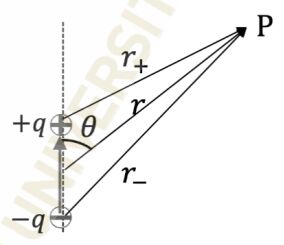
50. An electric diple consists of point charges ±q a distance 2a apart. The potential at an arbitrary point P can be expressed as V(P) =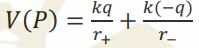 =
= , where k is the Coulomb constant, r+ is the distance to the point charge +, r− is the distance to the point charge −q. If r is the distance to the dipole center, for r ≫ a, the quantities r+, r−, and r are nearly the same as r2 ≈ r+r−. The difference between the distances from the two charges to P, that is, r− − r+, is approximately equal to 2a cos θ, where θ is the angle as shown in the figure. Eventually, the dipole potential for r ≫ a becomes V(r, θ) =
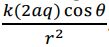 . What is the electric field
 at an arbitrary position P for r ≫ a? Note that
  and
and  are unit vectors.
 (A)
(A) (B)
(B) (C)
(C)  (D)
(D) (E)
(E) 
 阿摩線上測驗
登入
阿摩線上測驗
登入
 :1(C) 2 : 1(D) 4 : 1
 , respectively. In fact, the laws of
 and Biot-Savart are related in the same way as Gauss’s and Coulomb’s laws. What should be
 ? (A) Faraday (B) Ampere (C) Newton (D) Lenz (E) Maxwell.
 (B)
(B)  (C)
(C)  (D)
(D)  (E) ∈0μ0.
  . On the other hand, experiments show that resistivity is nearly proportional to (A)
  (B) 1/
 (C) T (D) 1/T (E) T2 .
 . How many possible orientations are there for its spin angular momentum vector? (A) 5 (B) 6 (C) 10 (D) 11 (E) 16
 and
and  are the unit vectors. (A)
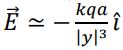 (B)
(B)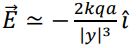 (C)
(C) 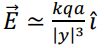 (D)
(D)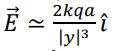 (E)
(E) 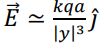
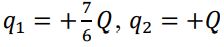 . If the force on q1 points in the −x-direction, what is the magnitude of ?3?
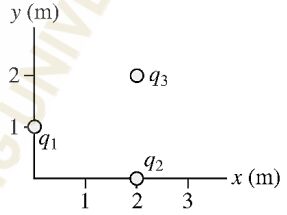 (A) Q (B)
 (C)
(C) (D)
(D) (E)
(E)
 . What’s the flux through the cube face C with the cube rotated 45°?
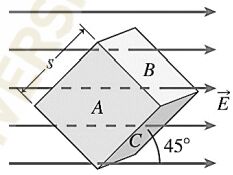 (A)
(A) (B)
(B) (C)
(C) (D)
(D) (E)
(E)
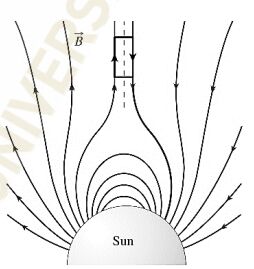 (A) 0 A (B) 103 A (C) 106 A (D) 109 A (E) 1012 A
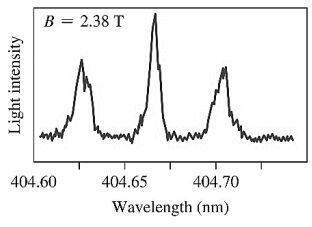 (A) Meissner effect (B) Stark effect (C) Raman effect (D) Hall effect (E) Zeeman effect. 。
 ≈ 1.414,
  ≈ 1.732,
  ≈ 2.236, and
 ≈ 2.646.
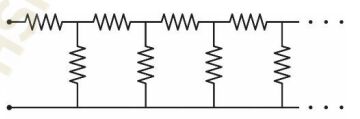 (A) 1.57 ? (B) 1.62 ? (C) 1.67 ? (D) 1.72 ? (E) 1.77 ?
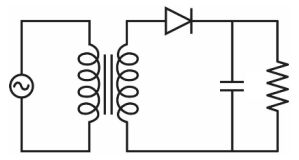 (A) As a step-up transformer (B) As a step-down transformer (C) As a DC power supply (D) As an AC power supply (E) As a photodiode
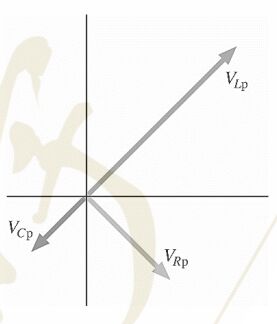 (A) The driving frequency is above resonance. (B) The driving frequency is about resonance. (C) The driving frequency is below resonance. (D) The driving frequency varies. (E) The driving frequency is dominantly determined by V?p.
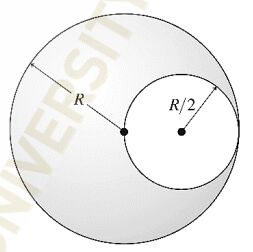 (A) ρR/2∈0 (B) ρR/3∈0 (C) ρR/4∈0 (D) ρR/5∈0 (E)ρR/6∈0
 (B)
(B)  (C)
(C)  (D)
(D) (E)
(E) 
 μ0πσa2(D)
  μ0σωa2(E)
  μ0σωa
μ0σωa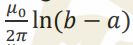 (B)
(B) 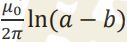 (C)
(C) 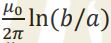 (D)
(D)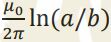 (E)
(E) 
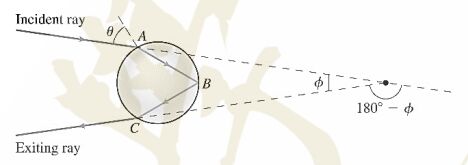 (A)Φ = 4 sin−1 (sin 2θ /n) − θ (B) Φ= 2 sin−1 (sin 2θ /n) − 2θ (C) Φ = 4 sin−1 (sin θ /n) −θ(D) Φ = 4 sin−1 (sinθ /n) − 2θ(E) Φ= 2 sin−1 (sin θ /n) − 2θ
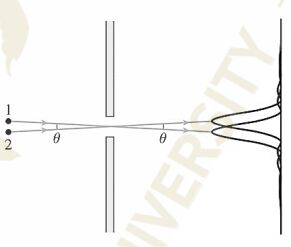 (A)
(A)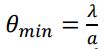 (B)
(B)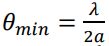 (C)
(C) 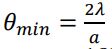 (D)
(D)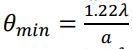 (E)
(E)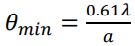
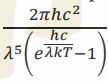
 , where Γ(n) is the gamma function and ζ(n) is the Riemann zeta function.
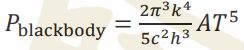
 . What is the Stefan-Boltzmann law for blackbody radiation?(A)
 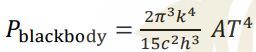 (B)
(B) (C)
(C) 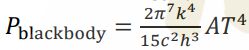 (D)
(D)